

SLABS
Exceptional Beauty from Italy’s Premier Quarries
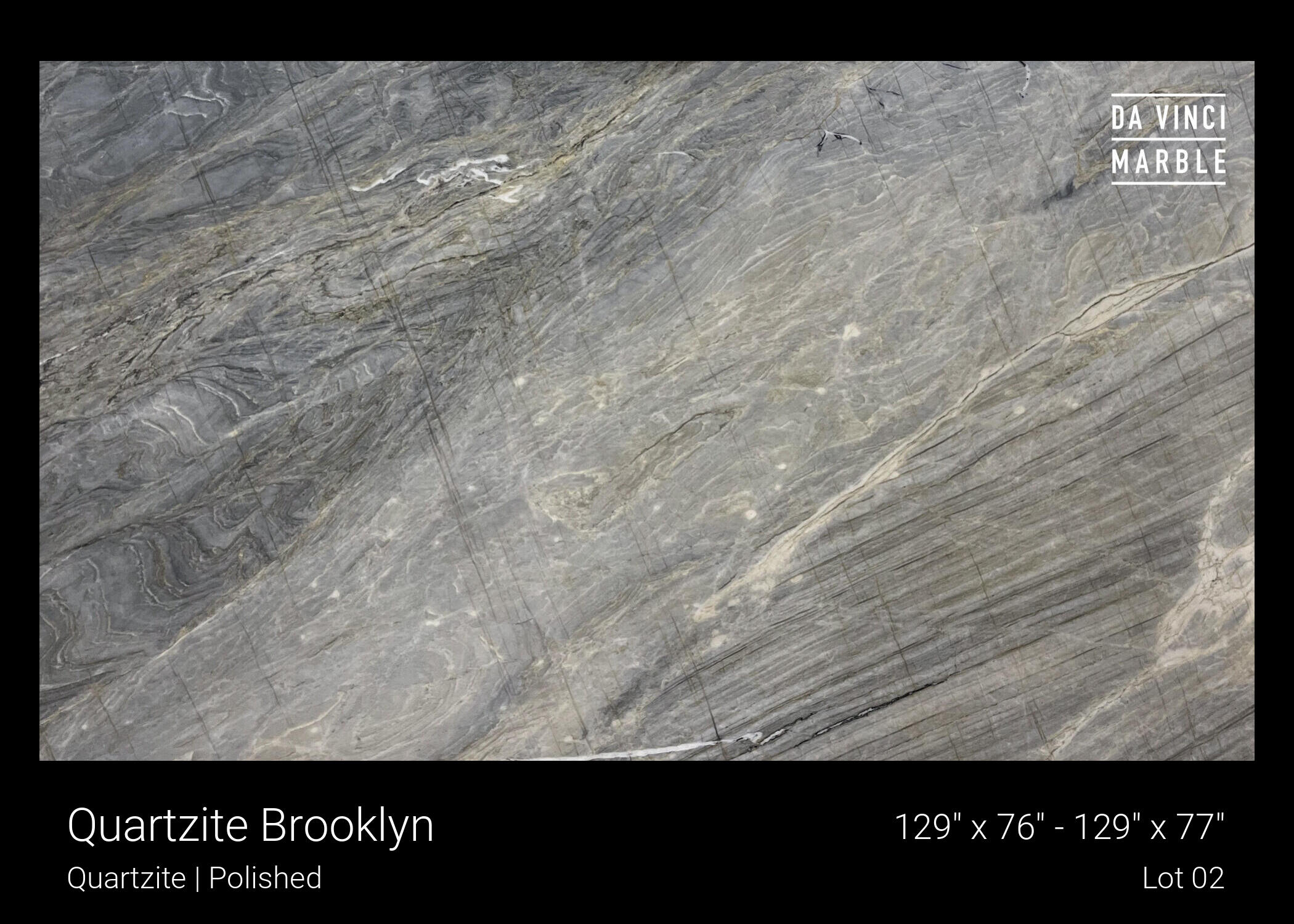
Quartzite Brooklyn


Quartzite FAQs
Stone Sourcing & Suppliers
How does Da Vinci Marble source natural stone slabs?
Da Vinci Marble works directly with quarries and suppliers in Brazil, Italy, India, Africa, and other major stone-producing regions. We maintain close relationships with reliable granite slab suppliers in Brazil, India, and Africa.
Our team personally selects the materials we bring into our showroom, ensuring quality and consistency. These relationships allow us to offer competitive pricing while remaining a trusted source for custom stone slabs and tile throughout the Bay Area.
What quartzite do you carry, and can you source specialty quartzites?
We stock a rotating selection of quartzite, including popular varieties such as Taj Mahal, Macaubas White, and Cielo. If you are searching for specialty quartzites like Madeirus (also known as Madeiras), we can typically source them through our supplier network.
Quartzite is one of the most popular natural stones due to its durability, heat resistance, and natural beauty.
Heat & Durability
Can you put hot pans directly on quartzite countertops?
Which countertop materials are the most durable?
Difference Between Quartz & Quartzite
What’s the difference between quartz and quartzite countertops?
Quartz countertops are engineered using crushed stone and resin, which makes them consistent in pattern and low-maintenance. Quartzite is a natural stone formed under heat and pressure, making it harder than granite and highly heat-resistant. While quartz does not require sealing, quartzite typically does. Homeowners choosing between quartz and quartzite often weigh consistency and ease of care against natural beauty and durability.
What’s the difference between granite and quartz countertops?
Granite is a natural stone with unique variation and strong heat resistance, while quartz is engineered for consistency and requires less maintenance. Granite typically needs periodic sealing, whereas quartz does not. Both are durable, but granite may be better for high-heat environments, while quartz offers a more uniform appearance.
Is quartzite better than granite for countertops?
Quartzite is often considered more durable than granite and offers a similar level of heat resistance, making it an excellent choice for kitchens. However, both materials perform very well, and the best choice usually depends on the desired appearance, maintenance preferences, and specific slab selection.
Cleaning & Maintenance


